0:07
Welcome to Smart Supply Chain, a podcast for supply chain professionals who think and work smarter.
0:12
I’m your host, Shireen Garrison, along with my sister and supply chain, Sarah Garrison.
0:17
Hi, Sarah.
0:18
Hi, Shireen.
0:19
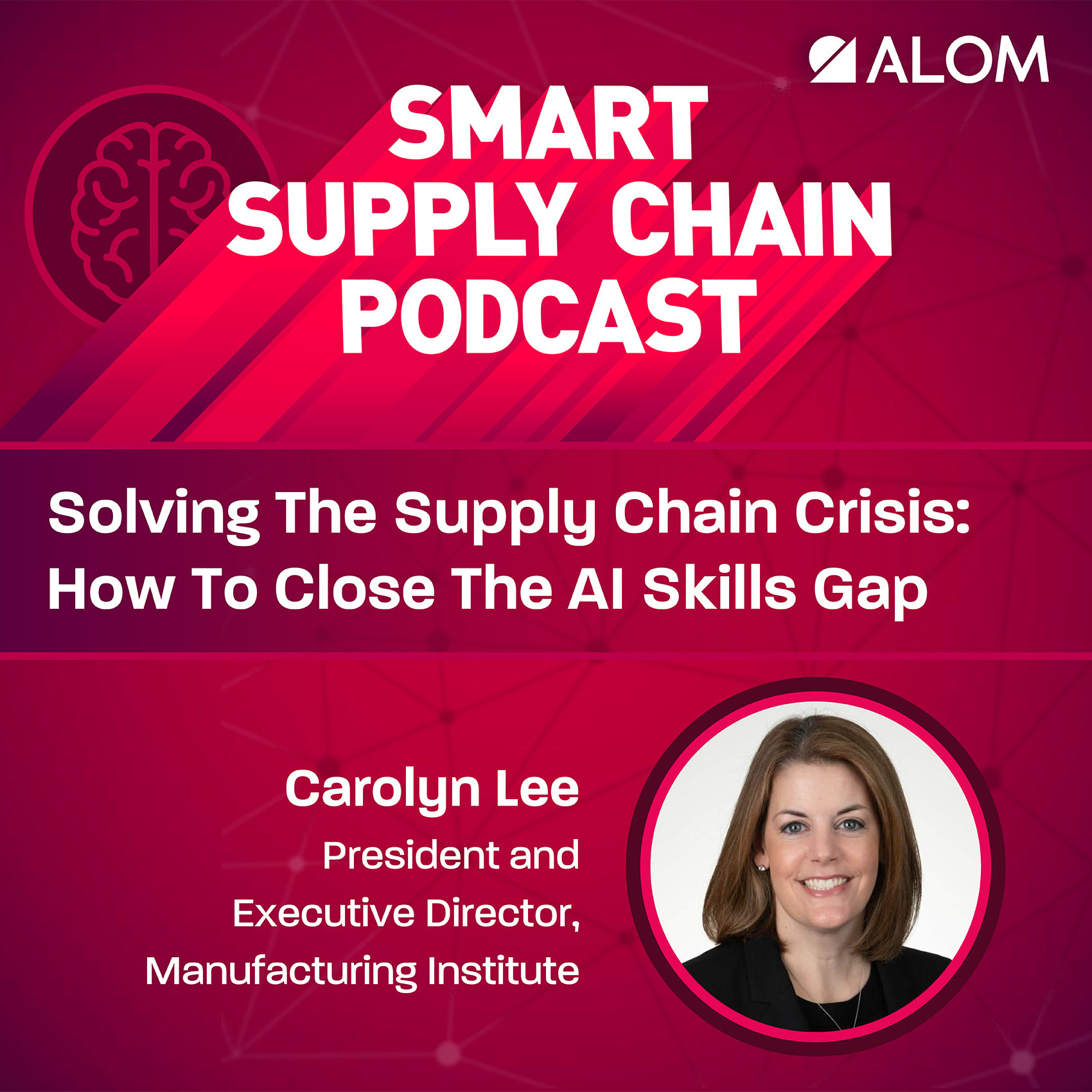
Today, we are absolutely thrilled to welcome Carolyn Lee to the podcast.
0:24
She is the President and Executive Director of the Manufacturing Institute, which is the nonprofit workforce development and education affiliate to N.A.M. or the National Associate Association of Manufacturers.
0:37
Welcome, Carolyn.
0:38
Thank you for having me.
0:39
Excited to be here with you guys.
0:41
Yeah, thanks so much for joining us.
0:43
We want to dig in a little bit and understand, for those listeners who don’t know what the Manufacturing Institute is, can you share with us a little bit about what you do there, what the mission is and why, why you’ve been in this since 2017?
0:57
That’s great.
0:57
Yeah, happy to.
0:58
So the Manufacturing Institute is the, as you said, the Workforce Development and education affiliate of the National Association of Manufacturers.
1:06
And our mission is to build and strengthen the manufacturing workforce for today and tomorrow.
1:11
We do that through a number of different pathways, I’d say couple different pillars.
1:16
We have programs and initiatives that are really focused on developing talent pools.
1:21
We do research to identify what are the biggest gaps we have in our talent pool and manufacturing.
1:26
And when I say manufacturing, I mean the broadest picture of manufacturing as an industry.
1:32
So all of the supply chain, all of the distribution, all of the logistics companies from railway ways to trucking companies to the manufacturers who make it all the way through the supply chain to the, you know, smallest pieces that go into everything that we do all, all of that and all of the roles in these those companies.
1:51
So whether you’re in finance or HR or communications, all of that and the production floor are necessary to make those companies.
1:59
So when I talk about manufacturer, and I mean all of it for the entity and that makes our part of the economy work.
2:05
And so we do the research, we have programs, initiatives, and then we also convene industry leaders because we know manufacturers want to learn from other manufacturers.
2:15
We are an efficient part of the economy, right?
2:18
That’s one of the things we pride ourselves on.
2:20
So learning what is working and how to replicate that, how to how to make sure that we’re not constantly recreating the wheel is really important.
2:31
So that together as an industry sector, we’re able to address our biggest challenge, one of our biggest challenges, which has always been making sure that we have the people we need to drive our success.
2:43
So how does the institute interact and interplay with the NAM organization?
2:48
Sure.
2:49
The N.A.M., we call it the N.A.M.
2:51
The N.A.M is actually our sole member.
2:55
So we are our 501-C3 nonprofit.
2:57
So we are a public charity working on behalf of manufacturing.
3:00
And because the NAM is our member, we are working on behalf of manufacturing companies and employers.
3:06
So we are fortunate to be headquartered in DC alongside the National Association manufacturer team.
3:12
And so we are there in headquarters.
3:14
They provide support and HR and communications and finance and accounting and all of those back office things.
3:21
And that is what they do to help support the MI in our mission.
3:25
But we are working, we develop our own.
3:27
We are independent in so far as the work that we choose to do, the work that in our priorities that we drive.
3:33
And then we actually also support the federal policy, lobbying and advocacy for workforce development and education.
3:41
A couple of years ago, the NAM team transition that over to the institute because we’re doing the work every single day.
3:48
And so that way the policy agenda is driven by what’s working on the ground for manufacturers across the country.
3:54
And that we’ve carried that to the halls of Congress and the and the various agencies throughout the executive branch to make sure that manufacturing and our workforce needs are well represented.
4:05
And so we work in close partnerships, but because we’re AC three, we’re also independent and we’re very fortunate to have a great, a great set of partners in the N.A.M. team.
4:15
And the chair of our board, the MI Board of directors is actually the N.A.M. CEO and President, Jay Timmons, who’s been a great advocate for workforce development and bringing more people into the manufacturing sector.
4:28
So we have a, a great working relationship and it’s been fantastic all these years to help really drive our agenda.
4:35
I come from the N.A.M. side of the House.
4:37
I was actually in the policy team before I took on this role back in 2017.
4:42
And the MI has been fortunate to really expand our areas of work ever since then.
4:47
And, and, and talents is always front and center.
4:51
So it’s, it’s very much part of the daily conversation in Washington, across the country, because we know we can’t do our work if we don’t have the people.
5:01
Yeah, I, I did read that you were in policy, you know, for a while there in your past history.
5:07
How does that influence kind of what you’re doing with the Manufacturing institute?
5:12
Well, I’d say my original influence goes way back, earlier than than my time on the hill.
5:18
My dad and my grandfather had a small machine tooling company when I was a kid, and I used to tell people they made nuts and bolts.
5:24
This was on Long Island in New York.
5:26
And, you know, I was fortunate to grow up in a manufacturing family, hearing about the importance of doing things and being productive, how important it is for people to be able to make things in this country and, and the way of life that comes from that.
5:39
And so I did find my way early in my career to Capitol Hill, I should say.
5:44
Dad also brought us in to do small jobs in the factory when we were located.
5:48
So go and work there.
5:49
And then for I did, it was, but was like fifth grade.
5:52
So it, you know, it’s not illegal when it’s your own children, I guess.
5:56
And so we did things from, you know, counting pieces to deburring things and packing boxes.
6:01
And you know, there was a drill press incident maybe around 6th grade.
6:05
And so, you know, you learned attempted to detail.
6:08
But you know, I grew up with that anchor that manufacturing was important to the, you know, the, the fabric of our society.
6:15
My grandfather would tell stories about wanting to, he kept changing jobs during World War 2 because he wanted to be drafted.
6:22
He was a machinist.
6:23
They weren’t drafting machinists because of course they needed to make sure that the machinists were keeping the facilities running with all those Rosies and building the armaments that we needed to succeed.
6:33
So, you know, I grew up with that in mind.
6:36
I found my way to Capitol Hill after college and worked for four years in the House of Representatives, four years in the US Senate, and then actually made my way off the hill to a manufacturer.
6:47
I worked for three M for a few years and then a couple different trade associations and found my way to the N AM where I was working on behalf of manufacturing companies on tax policy.
6:58
So all of that experience, you know, I was, I was really excited when, when Jay came to me with the opportunity to take on the MI role to, to apply for the MI role as executive director at the time.
7:11
And you know, it was, it was how we could, you know, I went to Capitol Hill to work in policy to help make people’s lives better through policy, right?
7:20
How can we make sure that our, our laws, our regulations, our systems are impacting positively our way of life?
7:28
And so BMI job, we get to do this, but it’s, it’s we know the people, right?
7:35
I know the names of people who have come through our classes.
7:37
I get to work on the ground with companies.
7:39
Our team is all across the country, as I said, working hand in hand with companies large and small to build these workforce development ecosystems and to solve the problems for individuals.
7:51
So I get to take the theory of why I went to the Hill to apply it in real life.
7:57
And I will say this is harder in a different way because of course, you know, every, every challenge is different.
8:05
You know what, what ails us on workforce development in Oakland, CA is very different than what it may be in, you know, Oklahoma City may be different than Kansas City, may be different than, you know, Hampton Roads, Virginia.
8:20
And yet there’s some common threads all the way across.
8:23
So how do you personalize and customize the solutions to make sure that it fits the region?
8:29
But it’s the common thread here is that it is really about changing the perception.
8:35
It’s about attracting different and the right talent pools.
8:39
It’s making sure that people know the way in.
8:40
There’s no one kind of manufacturing job, right?
8:44
So how do people find the way in and then find that upscaling pathway?
8:47
And then how do we help employers make sure that they’re retaining their talent pool and what works, what doesn’t, what are are our different generations of our workforce that are with the in, in the workforce today, right?
9:00
There’s about 5 generations of, of work for workers across the US economy who are working in manufacturing today.
9:07
They’re all looking for different things from employers.
9:09
So how do we like declutter and make sure we’re focusing on building and strengthening that that way of life?
9:14
So kind of a long answer, but it’s been a, it’s been an interesting journey.
9:18
We try to bring all those things to life to make sure that we’re able to compete.
9:22
Well.
9:22
I think you’ve definitely established your credentials.
9:26
With that in mind, we as you and the Manufacturing Institute look at 2026 and beyond.
9:33
What are the big trends and challenges that you see impacting the manufacturing landscape?
9:40
We have long faced a a structural talent challenge in manufacturing the institute.
9:44
One of the things we’re best known for and mentioned research a little bit ago, we have done a, a study with Deloitte every three years for the last, I don’t know, 18-19 years that is identified what is the talent gap in manufacturing.
9:59
And so in 2024, May of 24, we, we released the most recent one.
10:03
And what we found at the time was we would need to fill 3.8 million jobs in manufacturing.
10:08
Of those 1.9 million would go unfilled.
10:12
This is by 2033.
10:14
And when we talk about why they go unfilled, it’s because we don’t have the people and we don’t have the people with the skills.
10:20
So there’s this gap and why does it almost 4 million jobs?
10:25
Well, there’s retirements, of course, although that’s starting to Peter off a little bit as our oldest baby, youngest baby boomers are, are reaching retirement age.
10:33
There’s also the, we’re not having as many, as many people, right?
10:38
We’re not having as many babies in this country as this is a challenge for most industrialized countries actually.
10:43
And so you don’t have the replacement rate isn’t up there.
10:45
And we have the immigration leveling off.
10:48
We have that.
10:48
We’ve had a net negative immigration I think is what I’ve read in the last two years.
10:53
And so all of those things together, we have this gap not on the people with the skills to fill our jobs.
10:59
So skills would be the thing that I would say is that the biggest trend in the banner, what the skills are in what industries and how do we make sure people have them is then really the key.
11:08
And then you can add into that the thing that is in every conversation now, right?
11:12
AI and AI is going to be a skill set.
11:14
It’s like I was just talking to a company the other day talking about AI.
11:18
Everyone talks about this is it, this is monolithic.
11:21
And it’s not, it’s like a computer, but it has no software, right?
11:25
So this is a new analogy that I’m, I’m test driving, right?
11:29
It’s a computer without software.
11:30
You can’t just give computers to our workers and say good luck, go out and do good things.
11:35
It needs to have, you know, we’re Microsoft, you know, Office, so we use PowerPoint.
11:40
We use, you know, Excel, we use, you know, Outlook for our emails.
11:45
We need software in the computer to make our jobs easier, right?
11:50
AI is going to continue to evolve.
11:53
Of course.
11:53
It’s evolved so quickly in the last few years how we’re bringing in.
11:56
And for our purposes, well, there’s a lot of conversation about using generative AI in the office setting right now, people who sit behind computers in the knowledge set setting, there’s not a lot of conversation.
12:08
But how are we bringing AI and the AI skills that individuals are going to need to the production floor to those settings so that generative AI and the Nagentic AI next will actually help enable people to do their job better and to get better outcomes.
12:23
And there’s this gap here and the skills are lacking.
12:26
When we talk to manufacturers, one of the biggest gaps they’ve identified as to why they’re struggling to bring AI to the factory floors.
12:33
They don’t have people with skills.
12:35
And so the skill theme keeps coming through.
12:38
So as we look at the constant and rapid evolution of technology used in manufacturing and we’re still in that four dot O revolution and moving on to whatever revolution comes next, probably 4 1/2 or five, it is how do we make sure that the people have the skills to be able to succeed in that.
12:57
And I would say that skills attainment, especially when it comes to AI, there’s so much in the media every single day about the forecast of there will be no more workers, right?
13:07
There will be no more jobs and all of us are going to be, I don’t know, writing and on vacation.
13:12
I don’t believe in that future, you know, I will there be efficiencies?
13:15
Sure.
13:16
Has there always been efficiencies?
13:17
Yes.
13:18
Will it change our tasks?
13:19
Yes.
13:20
But all of those things can only happen if people have the skills.
13:24
And I would argue that the best way to weather the transition, any technological industrial transformation is to make sure you have the skills to be able to, to ride the wave and move through it.
13:35
And that’s something that we’re really focused on in these next these next few months.
13:39
I mean, in my experience, lots of people are really afraid of AI.
13:43
They’re afraid to make a mistake.
13:45
So they just don’t want to be involved in it at all because they think it’s dangerous or other people think that it’s perfect and it’s going to take all the jobs away, right?
13:52
Because it’s going to solve everything for low manufacturing jobs or supply chain or any, any industry really.
14:00
What do you think that companies should be doing with their employees to prepare for that?
14:04
Just to get people in the right mindset or, you know, bringing on new employees that maybe understand a little bit more about AI.
14:11
What do you think needs to happen there?
14:13
Well, I think we need to talk about I was at AI was at a session with executives that the N AM hosted back in May.
14:20
We were in Milwaukee area and there was a, a local CEO who said for, for a multinational company who said, look, don’t just think about like, what are you doing with AI?
14:29
You got to think about what are the solutions you want to have AI help you, you know, the problems that you want AI to help you solve.
14:35
So, so that’s first, I think companies need to talk about what this transformation means, what use cases they’re looking to, to deploy AI in and test in and then what are the pieces?
14:46
Because not talking about it makes everybody scared, right?
14:49
So let’s address it and say, This is why we’re trying to do this, because we’re trying, let’s talk the production side.
14:55
We’re we’re looking at energy efficiency because AI can look at all the data and all the systems and that’s running and say, OK, well, if you do these things, you could be more efficient and use less electricity.
15:05
That’s a good thing.
15:06
How are we looking at moving supplies, you know, and the supply chain elements to help drive just in time or lean manufacturing, right?
15:15
Where, what, what inputs are coming from, where and how you get them into the best place.
15:20
How do you optimize machinery?
15:21
How are you looking at predictive maintenance in a different way so that you can have higher throughput and higher efficiencies?
15:28
So if you look at it like that, no one’s like, Oh my God, I was so scared of AI because they go, oh, that makes a lot of sense.
15:34
It’s looking at data manufacturers have been using AI already for years, machine learning and vision systems, those things.
15:42
I was out of presentation.
15:43
This was like 3 years ago when AI first was bubbling.
15:45
And yeah, it was for the Manufacturing Leadership Council, which is the digital transformation division for the NAN.
15:53
And they were at their big Rethink conference and there was an AI session on the agenda.
15:58
So I went and like, OK, what am I going to learn?
16:00
And the skills and the and they were talking about using vision, AI empowered vision systems to detect flaws and silicon chips, which at a microscopic level the vision system could detect that humans couldn’t.
16:15
Makes so much sense, right?
16:17
And of course that’s a great use.
16:19
And if you talk about it like that, that is a very different narrative than the Armageddon notion that comes out in the media that AI will take all the jobs and there are no people.
16:28
It’s what is the problem you’re trying to solve and how have these technologies now?
16:33
Will autonomous humanoid robots have a role in manufacturing future?
16:40
At some X number of years in the future?
16:43
Maybe, but we already have automation, right?
16:46
And every single employee, this is this is God honest truth.
16:51
Every employee had ever asked at any facility all across the country.
16:55
And I said to them, what do you think about the robot, the cobot, whatever the automation, Everybody has always told me they like it because it makes their job better, safer, easier, and they get to do the things that they’re more interested in and not the thing that was less interesting, like the lifting, picking and putting down.
17:14
Yeah.
17:15
I mean, I love that you talk about like it’s, there’s always been, you know, automation and manufacturing.
17:21
That’s always been a thing that everybody’s always looking for some ways to automate kind of nitpicky little tasks that we don’t need to do.
17:30
Yeah, we should embrace that.
17:31
And I love that you’re talking about like how that interacts with humans, with humans.
17:36
It’s not just an AI solution, it’s also a human solution, right, Right.
17:41
And when we talk about things like predictive maintenance or, you know, like that, you don’t have to go to take general of AI.
17:47
So where we are today having a, a closed secure system for generative AI on a facility floor, factory floor and that you can have any operator go in and say this is the flaw that’s come fault that’s coming up or this is the thing that’s happening.
18:05
What do I do?
18:06
What is next, right?
18:08
I’ve been to facilities where when you have that question, you’ve got the more tenured worker who goes in the back and pulls out the book and goes through all the manuals, right?
18:17
Or rolls out the blueprint and says, this is the thing and it’s from, you know, my dad’s shop.
18:21
It would have been like, this is the thing from the machine from 19, you know, 48.
18:25
And now you can, you can go in and say, OK, well, this is all of the different use cases we’ve had all the way along.
18:32
This is what this all means.
18:33
And now you’re empowering a more the, the, the closest level to the problem to solve an issue and a challenge, right?
18:43
And that’s what as leaders, we need to do is help make sure that decisions and, and solutions are able to be driven by the closest unit of Labor to the, to the closest worker to the challenge, right?
18:56
Well, now they can go and figure that out and help solve things faster.
19:00
That’s an entirely different notion.
19:02
And if we bring that to life, I think people can understand it and not be so afraid.
19:07
And what’s interesting about AI in particular, I have three teenagers.
19:11
And when I talk about this, you know, my husband and I talk about this day-to-day, they’re really scared of it because they’re hearing all of these, right?
19:18
And you’d expect our kids the same generation who thinks that, you know, they’ve never seen a commercial on network TV.
19:24
And it’s alarming and jarring to them because everything’s on demand, right?
19:27
I was just explaining to my kids what event TV was like when we were kids, why everybody would stop to watch this thing, right?
19:35
They don’t know that because they live in an on demand world.
19:37
So they’re used to this ubiquitous technology that’s constantly interacting, but they’re concerned about AI because they only hearing this, this threat narrative.
19:47
But if you explain the use cases like we’ve got to bring everybody to the table on this and, and as leaders and businesses, we need to help be really clear about it, about how it can enable and empower and augment our teams and our workers.
20:04
That is, that is something that we need to do more deliberately and more clearly because we’re we’re going to lose it because it’s going to get too far away from us because the fear factor is so high right now.
20:16
So I’m going to do a call back to something you said kind of at the beginning of that you were talking about this shortage of workers.
20:22
I assume that takes into account that, you know, AI is, is not going to solve every problem and we’re still going to have this shortage of workers.
20:31
So can you share with us a little bit about what advice you would give to companies who are are thinking ahead around their employees and their skills and what they should be doing to get ahead of the shortage you see coming?
20:50
Yeah, sure.
20:52
So our study was, I’m trying to think of the timing.
20:55
So we released it in May of 2024, which means the surveys were out in the market, out in the field in early 24, late 23.
21:04
I think we began the the survey work that that that data is based on.
21:09
So I think ChatGPT, which was the first big, you know, AI come and tell real life conversation.
21:17
I want to say that was that had just happened in November of 23, right?
21:22
It’s been a couple years now.
21:23
Maybe it was November of 22.
21:24
I remember it was late, late fall.
21:26
I don’t know how much the data that we saw at the time is, is reflective of the conversation of AI.
21:35
So that’s what next year’s paper when we put it out, I’m sure there will be a heavy theme there.
21:40
Now that being said, I’ve been doing this eight years.
21:43
This is my third Deloitte study that I’ve I’ve talked about and worked on and we’ve been doing this overall for about 1520 years.
21:51
It’s always been the same.
21:53
Essentially there is 3 to I guess it’s 2 to 4 million workers will need and half many of them have always been expected roles have gone unfilled because we don’t have the people with the skills.
22:06
So I think that trend is pretty stable because we have this other trend in manufacturing where people don’t know about our holes that younger workers.
22:15
And if you think about this has been the case ever since the Great Recession that people have been more wary about manufacturing roles.
22:21
Now, ironically, you take another cataclysmic event, COVID greatly improve the perception of manufacturing jobs and the durability of those jobs, particularly among parents, because we stayed open because we had to create everything that for all of us to, to make it through, right?
22:37
So that was a big deal that actually helped boost the perception of manufacturing careers.
22:43
As we talk more about the technology enabled manufacturing, the 4.0 enabled manufacturing that we have today, that also helps bring more people in.
22:51
So it’s this weird, right?
22:53
We’ve got to have more people understand, understand we’ve got to talk differently about the skills.
22:57
So what should companies be doing?
22:59
Companies need to think differently about hiring.
23:01
This is like my new soapbox.
23:03
We for a long time, I can hear my, you know, point back to my dad and my grandfather.
23:09
What I need is a person who’s done this one job like this on this one machine for all these years.
23:14
And at 12 years, that’s when they know the things that I want them to know and that’s the person I want to hire.
23:20
We don’t have a lot of that sitting on the sidelines right now, right?
23:23
And So what we need to do and what we advocate for at the Manufacturing Institute is, is employer LED workforce development solutions.
23:33
And that doesn’t mean the employers are on their own.
23:35
They got to figure it all out.
23:36
It’s that employers need to help set the standard for what workforce development is needed, what the skills are, and then work with entities like us and with other other facilitators across the country who are bringing manufacturers together in order to collaborate on training.
23:56
So I’m I’m branded today for Fame USA.
23:59
It’s it’s our which I didn’t do on purpose but is is very fortuitous right now.
24:04
FAME is a multi employer earn and learn apprenticeship program that we adopted.
24:11
We took on from Toyota in 27/20/19.
24:14
Excuse me and at the time it was it had about two hundred 250 companies working in nine states 17 locations chapters working together in a collaborative to train for a multi skilled maintenance technicians.
24:29
Toyota created it to address their own multi skilled maintenance technician gap to to build more of a talent pool.
24:36
It’s something most manufacturers with automation or with or, or any automated equipment need, as well as those companies who are in supply chain, distribution centers, hospital systems, grocery stores, right?
24:47
We all need people who can keep this equipment running.
24:50
So Toyota saw this need.
24:51
They built this program.
24:53
They started bringing others into it to help that guarantee enough students in a cohort that the community college in the region would commit to providing the training.
25:03
It grew and grew and 2019 Toyota transitioned it over to the MI for national stewardship.
25:09
What we are doing today is we have built a system.
25:13
It’s called We Are.
25:15
Our entity is FAME USA and the network building and supporting the franchise as it grows across the country.
25:23
So we teach regions how to come together, companies to come together to commit to work with community college to train over 21 months global best multi skilled entry level maintenance technicians and what’s appropriate for that particular region like the companies that are in that area.
25:40
Yes, it’s a actually what there are two yes and no.
25:45
There’s such a Common Core base for maintenance technicians that there’s enough agreement that these are all the things you need to know, electrical and PLCS and pneumatics and hydraulics and a couple other systems that are part of it.
25:57
You also get lean manufacturing and manufacturing culture.
26:01
So whether they go into a pharmaceutical company or an oil gas company or a automotive company or a machine tooling shop, all of the common core is the same.
26:13
And then the manufacturers just train for their specific system, right?
26:18
But there’s an agreement on all of the base that’s at the center of it, right?
26:22
And, and then all of them work together to expand the pool of who to hire instead of all fighting over the same 6 people who have that skill set, right?
26:32
So I use that as an example because today what manufacturer needs to do is identify what are the skills they need, right?
26:39
What what are the skills that are associated with what roles, how to look at different, look at different talent pools to bring them in.
26:45
Maybe somebody was in the military and working on a tank and their mechanic skills from that actually could apply over here in the private sector.
26:56
It’s not direct.
26:57
They probably didn’t have the same systems, but they have the core skills that would be relevant.
27:02
Maybe it’s they’re coming from a wholly different sector of the economy and those skills could be applied.
27:07
So there’s the how to grow the talent pool and then how do you build the talent pool and develop your own talent pool, which is what we do in fame in that skill set.
27:15
And that’s because it’s such a huge demand.
27:18
But what a companies have to do, they have to be able to look and say, this is what I need, how do I get it instead of only going back to I’ve always hired from this 1 or this one’s college or university or somebody with this one specific think.
27:36
Think about the competency rather than the direct experience or go adjacent and think about how do we develop a new talent pool to fill that pipeline in a consistent way.
27:47
And what better way to do it than to work together in your region, especially because most people are are located near some of their suppliers, right?
27:56
Or their customers.
27:58
So solve it together.
27:59
And manufacturers, the employers leading that solution can really help us close this gap because, yeah, there’s going to be some technology solutions, but then that technology is going to create new jobs that we need to fill too.
28:11
Yeah, that’s a cool program.
28:14
Talk to us a little more about differences between the generation, right?
28:18
So what, what a worker who has a supply chain, a professional who has, you know, 20-30 years experience needs to be doing and thinking versus, you know, what, what is happening around, you know, the young people and creating that funnel.
28:33
Yeah.
28:33
So I would say there’s two different levels of it.
28:35
It’s like, what should you be doing?
28:37
And then there’s also what should employers be doing to retain those people ’cause it’s, it’s particularly important because there aren’t so many people sitting on the sideline with the skills and experience you need.
28:46
How do you make sure you keep them?
28:48
So let me tackle the second one first on the retention side.
28:52
What what we see and this is, and you know, again, I said I had three teenagers.
28:57
They’re like, they hate when I generalize their especially their generation, right?
29:03
And I’m a GenX, so I’m just happy to be here.
29:05
I’ll take whatever job you tell me to do and I’ll run home, right?
29:08
That’s that’s like the nature of our generation.
29:10
But we’re also in a, we’re in that crunch where we’re caring for parents and we’re caring for kids, many of us.
29:17
And so we’re in this caretaker crunch.
29:19
What I need what GenX needs your older millennials need is they need some flexibility to manage both of those demands in their lives.
29:29
And and if you’re caretaking in whatever form or function that’s going to require a different set of of needs, your younger workers, your your youngest gens or say your Gen.
29:43
ZS, they want to know that there’s a pathway.
29:46
They want to know that that their employer sees them values them will invest in them and they want to know what’s next.
29:52
Doesn’t necessarily always need a promotion, although I’m sure they would be very open to it.
29:56
It could mean what skill are you going to invest in me to learn next, right to develop what I as a, as a, as a, you know, for the GenZs.
30:06
it’s what are they as, as a young worker early in their career?
30:12
What skill are we going to help them gain that will enhance their, you know, day-to-day role or their ultimate career goals and aspirations?
30:22
But if you’re not training them, investing in them, you will not keep them long.
30:26
And I think that’s a really good lesson for all the way through the generations for older workers, how are we helping them transition their knowledge and share their knowledge with the younger generations?
30:36
How do we put them in a position to mentor?
30:38
And this is not just for executives.
30:40
This is for anyone in any role that’s been there for a long period of time.
30:44
How can they be a mentor?
30:45
How can they also benefit from a reverse mentorship from their younger workers?
30:49
So maybe they’re learning things on, you know, I’m, I’m terrible at PowerPoint.
30:54
When I worked in the Senate, like I think we had like, you know, stone tablets, we didn’t have some of the tools that even some of my own peers as they came into our jobs that were fully, you know, available to people.
31:08
So I’m always like, I do this thing in PowerPoint to make this better.
31:12
Some of our younger workers, they, they’re, they’re fluent in it and they can help me do better, right?
31:17
So how do we share that knowledge back and forth?
31:19
So all of those things are really key on the retention side, on the attraction side, particularly for anybody younger than Gen.
31:27
X and particularly after COVID.
31:30
What do you stand for as an organization?
31:32
What are your values?
31:33
What do you believe in?
31:35
Right.
31:36
And although the labor market isn’t as hot as it was coming out of COVID, where we had, you know, there was one point in 2022, we had nearly 1,000,000 open jobs in manufacturing.
31:50
I’ve been doing this eight years.
31:51
We’ve had about 400,000 most of the time.
31:53
Sometimes it’s 5.50. August of 2022, we had nearly 1,000,000 open jobs.
31:59
And so it was a, an, an employee market, right?
32:03
There’s the buyer and seller market in housing.
32:04
This was an employee market and employers had a look and say what am I going to do to get and keep people and talking about your values, What do you stand for matters.
32:14
It still matters today.
32:15
Even as the mark job markets kind of gotten to a little bit more equilibrium, it’s a little quieter.
32:21
So talking about what you believe in, what your values are, what what your employees can expect and then then it from is a really important thing for manufacturers.
32:31
Culture has never been more important than it is, particularly in the years since COVID.
32:36
And it’s got to be front and center and directly tied to your attraction and retention strategy.
32:41
People leave jobs and managers, we know this.
32:45
So how are you engaging particularly your frontline supervisors to have have them really engage their their workers, right, The frontline workforce in in development and not just go in and do your job because it’s our youngest workers are looking truly for development opportunities and, and, and just opportunities at large.
33:09
So we have to make sure we’re providing them.
33:12
What are you seeing like with universities in terms of what they’re focusing on with supply chain programs?
33:21
You know, that’s a great question.
33:23
I would say that we’re hearing more about supply chain.
33:28
It’s funny, before COVID, this is, this would not be your experience, right, From a supply chain company perspective.
33:35
Before COVID it was kind of a very rarely talked about conversation.
33:41
Today it’s very, you know, ever since in these last six years, it’s very much front and center and what are the tools and the technologies and what are the systems that people are using and the elemental right bringing it front and center.
33:54
We actually, well, it’s not on the university level.
33:56
At the Community College level, we have been training these last couple of years transitioning service members with entry level certifications for supply chain and logistics roles in manufacturing.
34:09
But we’re who we’re training are people who are coming out of the military with supply chain and logistics roles, which of course has a, a huge number of women have been in these roles in the military and they what they’re getting is the civilian certification, but they already have all this experience and those, those classes fill up immediately and those people get hired immediately because the demand is so prevalent.
34:30
One thing that I have heard from universities and colleges is that they want more company engagement so that we’re bringing it to life.
34:38
And it’s not just this theory.
34:40
I would say supply chain and logistics could use a, a rebrand because a lot of people are like, wait, it’s what?
34:47
And they don’t really understand, but it’s that elemental role of making sure that all the rest of this works, right?
34:56
And so how do we bring that forward?
34:58
And that’s where for a lot of universities and and colleges that I’ve spoken with, you know, they’ve been interested in getting more companies to bring it to life because when when employers engage at any level of education, you get better outcomes.
35:12
Yeah.
35:12
And we’ve definitely had a step change in people’s understanding, which is really good.
35:16
So your point about, you know, driving it even further is spot on for sure.
35:23
Now tell us as you’re looking forward, what are the risks that are out there?
35:28
What are the gotchas that people should be thinking about?
35:32
You know, for a long time at the manufacturing institute, we’ve talked about credentials, right?
35:37
And and there’s a big conversation workforce developed in the world about credentials and skills based hiring.
35:44
And yet and and that that ranges from, you know, we offer through our heroes make America initiative, our veteran training transition as a military manufacturing transit program.
35:56
We offer the a pathway for service members to receive digital badges that identify the skills that they’ve earned during their time and service and how that aligns to manufacturing certifications and, and tasks and roles and, you know, skill priorities, skill buckets.
36:21
And it’s fantastic for the service members.
36:22
It really helps them understand, you know, from communication and leadership, but also some some hard skills and technical skills.
36:29
And it’s helpful for them to see then, oh, actually I could do these jobs.
36:33
The bigger gap is that for manufacturers, we’ve been hiring the base that the way that we’ve always been hired hiring.
36:39
And as you look at that, that conversation we had, that there aren’t enough people with the skills we need for the jobs that we have, we have to look at different pools.
36:48
A talent, maybe it’s from the military, maybe it’s from a second career, a job changer.
36:52
Maybe somebody’s coming out of the criminal justice system who had been justice involved and they’re looking for a new pathway, right?
37:00
And how do we as employers look at our roles differently?
37:04
What are the skills that you need that you can teach?
37:07
What are the skills that you need them to walk in the door with, right?
37:11
And then how do you adapt your hiring to make sure you’re bringing in the widest pool possible?
37:17
So there’s a couple different efforts.
37:19
The one’s called it’s, it’s, it’s about the glass, the paper ceiling, right?
37:25
Ending the paper ceiling.
37:27
A lot of lot of job requisitions default to, oh, I’m just going to put in a bachelor’s degree required.
37:33
You might not need one, but it was an easy way just to filter, you know, applicants.
37:39
Well, do you really need it?
37:40
If you don’t need it, don’t put it there, right.
37:42
How do you think about what experiences you need?
37:44
And we have to change our systems.
37:46
I was talking about this with somebody again on the soapbox recently and they said to me, yeah, but no one’s ever been in trouble with a with a, with a hiring manager when because you hired somebody with a degree, even if they didn’t need it for the role, right, Versus some taking a risk on somebody else.
38:01
We got to change our behavior because our talent population is really changing right now.
38:06
You can get away with doing what you always done.
38:10
We’re not going to always be able to the the public perception and and public momentum for say 4 year degrees has changed cost of education, The people not getting jobs that that pay the level of of debt that they may carry.
38:26
And I’m not a everybody has to go to college or not go to college.
38:29
Like I’m not where those people.
38:31
We need all of the things, right?
38:32
There’s many pathways to opportunity.
38:35
What I always preach is that you have to get the skills you need for the job you want.
38:39
Identify the job you want.
38:40
What is what is give our prerequisites for that?
38:44
But manufacturers need to be looking at that differently because the population is changing so dramatically right now.
38:50
And we’re going to be left in a bind if we haven’t built up the muscle memory to do this differently as we go forward.
38:59
Yeah, I love it.
39:01
So you talked about the FAME program and then some of the work that you’re doing with service members.
39:06
Are there other programs that the manufacturing institute is supporting or driving?
39:10
Yeah, absolutely.
39:11
So one of the things, and this is like the easiest entry, the biggest thing that we do, every company in the manufacturing ecosystem needs to open their doors and bring in their local students.
39:23
And I say students, I mean, starting in 4th grade all the way through your university and college students two year and four year.
39:30
And you know, even beyond, most people don’t understand what we do in our sector, right?
39:35
They don’t they, they hear supply chain, they hear, you know, manufacturing operations.
39:42
They don’t know when we go out and we try to talk about perception and, and challenge with perception manufacturing before it’s all tied back to people don’t know.
39:50
You can’t be what you can’t see, right?
39:53
Why do most kids want to be a teacher, a nurse, a doctor, a police officer, fire?
39:57
Because it’s things that they can see, right?
40:00
So we have to open our doors and bring people in.
40:02
So we support what’s known as National MFG Day, manufacturing days, the 1st Friday, the every October.
40:08
But quite honestly, do it any day that works for you and your local schools where we build tools and resources to help manufacturers figure out what they need to do, how to invite local schools in, and then what do you do with them when you bring them on site.
40:21
And we encourage companies of all sizes to do this.
40:25
And not just students, but also parents.
40:28
So if we just take a step, if we got, you know, we think we had about 3-4 thousand different manufacturing day events last year.
40:35
It’s really hard to tell because it’s become a very grassroots effort ever since COVID.
40:39
But we know there were thousands and thousands of these events happening across the country.
40:43
If we just had 5% more, we would open people’s eyes to the potential for different kinds of careers.
40:52
And here’s the kicker.
40:53
Not only does it open people’s eyes and bring them in and dispel preconceived notions of the dirty, dark and dangerous and all of that and change the perception for parents.
41:02
And who are the most important influencers in a student’s career choice After the students own experience.
41:08
So their experience matters and their parents experience matters.
41:11
Bring them both in.
41:13
It also helps your current workers because nothing makes a worker more excited about what they do than being able to tell somebody else, hey, what I do matters.
41:22
It’s cool, it’s innovative.
41:23
I’ve this is my career, right?
41:25
I’m excited about my own career because I got to just tell you guys about it, right?
41:28
So when you bring people in and you let your own workers talk about why what they do matters, it reinforces to them that they have a role, the part of a team, their mission matters.
41:37
And all of that’s good for morale, which is good for retention and then for attraction, all these things.
41:42
So manufacturing day is a super easy way to engage locally, to build those connections in your community, right, And to help build your workforce development ecosystem, which eventually is going to help you or your supplier.
41:56
So that is another part of our student engagement initiative.
42:00
And then we also do work around on the program side, our STEP initiative, which alone has had many winners over the years, where we highlight and recognize women and allies in manufacturing who are leading, who are role models, who are helping make change both on their in their companies, but also in their communities.
42:20
And we are barreling towards our 2026 event, which will be held in late August, excuse me, April in DC, where we’ll recognize this year’s winners, which will include a whole class of champions who are helping support, bringing more women and allies into the sector.
42:38
And so we’re really looking forward to that event this year.
42:41
Those are two really great programs for sure.
42:44
Yeah, Elon gets involved with both of those things.
42:47
And we really enjoy it.
42:48
When you see the students walking around and the in the warehouse and just kind of the looks on their faces and it’s it’s great.
42:55
They have no idea what happens in these big buildings back on the road.
42:58
That’s right.
42:59
That’s right.
43:01
I mean, I think it’s really encouraging just to see how all those programs are opening up the doors for individuals and also helping companies to figure out the way forward and how to modernize a little bit the way that they’re thinking about manufacturing.
43:14
Because, you know, not everybody had your dad and your grandfather to kind of bring them in and show them those kinds of things.
43:21
Any other resources that you want to share?
43:24
Oh, there’s so many things.
43:24
It’s all there.
43:26
Fame, famehyphenusa.com is where you can find information about fame And we’re continually spreading.
43:33
We actually launched I think about a year and a half ago, our first California themed chapter in the Fresno area.
43:40
And, but they’re in in states all across the country.
43:44
And, but you can find information on all of these topics and at the themanufacturinginstitute.org and help make sure that we’re advancing.
43:52
We have one, we have one and that’s making sure that people are able to make their lives better through good manufacturing jobs.
43:59
And so our focus and mission on building and strengthening manufacturing workforce is how we get there.
44:04
And we are here and available as a resource to all.
44:08
Just let us know what you need.
44:10
Love it.
44:11
Carolyn, we do have one final question for you.
44:13
I know you travel all around the world for your job and you have to do lots of speaking engagements, but I am curious, what’s the best vacation that you’ve ever taken?
44:23
Or do you have like a dream destination that you would love to go to?
44:27
Oh, my kids are teenagers and we’ve been really fortunate to do a lot of different trips with them.
44:34
And this is so hard.
44:36
A year ago we had a couple of big birthdays and big events and we decided on a whim to take the kids to Rome for and that was over Christmas.
44:47
And that was an amazing trip to be only counted by.
44:52
We did an RV trip on the parks out five parks in national parks in Utah and Arizona.
44:59
And that was awesome.
45:01
I’d always wanted to do an RV trip, and I guess I was probably happy my kids were young enough that they all wanted to be locked in the vehicle together for a week.
45:10
But it was amazing and it was amazing to have them see just the vastness of the American, you know, countryside and and out West, right like it, it’s hard to put to words.
45:21
So those are two of our greatest trips and very fortunate to get to do that with the kids.
45:26
I also tell them about my manufacturing trips all over the country.
45:29
But you know, I, I keep telling them I got to bring them out to manufacturing day this year because I’ve got my oldest one knows what she wants to do.
45:35
My younger too.
45:36
No idea.
45:37
I got to get to work on that because say you got to get get to get to work on your family as well.
45:41
They get them while they’re young, right?
45:44
That’s amazing.
45:45
Carolyn, thank you so much for your time today.
45:48
Carolyn Lee is the president and executive director of the Manufacturing Institute.
45:53
And I, we really appreciate you being our guest today on Smart Supply Chain.
45:57
Thanks everybody, from myself and also my sister and supply chain.
46:01
We’ll catch you next time.
46:02
Or you can look at us up on ALOM.com.
46:06
Thank you.
46:07
Thanks for having me.