Since launching our first online B2B portal in 1998, we’ve helped brands turn e‑commerce into a competitive advantage. Today, ALOM delivers full-service e‑commerce and e‑fulfillment solutions built for the demands of both B2C and B2B markets.
Online buyers expect speed, accuracy, and security. At the same time, you’re under pressure to control costs, handle demand surges, maintain product availability, and protect customer data.
With ALOM, you gain the technology, security, and fulfillment expertise to meet those challenges. From branded webstores and merchandise catalog management to payment processing, fulfillment, and returns, every step of the buying journey is seamlessly connected so your customers enjoy a flawless experience and your brand earns lasting trust.

“Supply chain is the foundation of our business. The partnership with ALOM ensures that our supply chain is operating at the highest level of efficiency and our customers are completely satisfied.”


“23andMe has been a partner with ALOM for over a decade. ALOM’s partnership has helped us grow from a small startup to the public organization that we are today. They are experts, that’s for sure.”


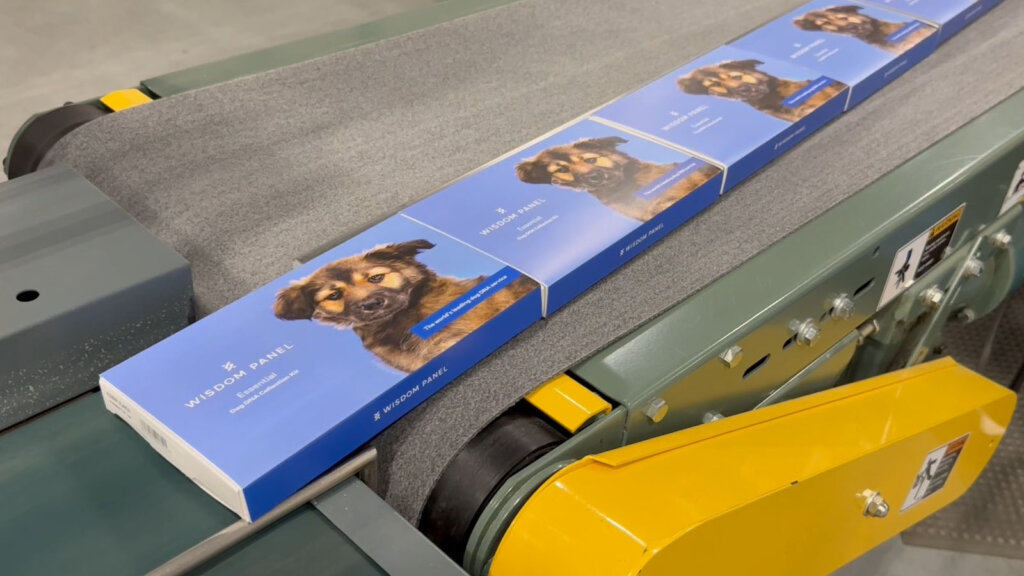
“We think of ALOM as an extension of Wisdom Panel, rather than a vendor. No matter what we need, ALOM is willing to go above and beyond.”

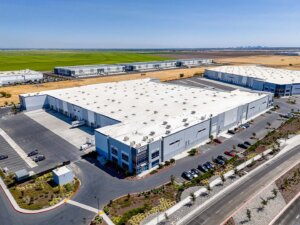
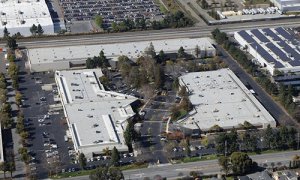


Fremont, CA – 258,000 sq. ft. in 2 facilities
Production lines |
Fulfillment lines |
Freight docks |
Pallet locations |
Climate control |
|---|---|---|---|---|
12 |
8 |
23 |
7,942 |
Yes |
Sacramento, CA – 170,000 sq. ft.
Production lines |
Fulfillment lines |
Freight docks |
Pallet locations |
Climate control |
|---|---|---|---|---|
6 |
6 |
33 |
10,210 |
Yes |
Indianapolis, IN – 230,000 sq. ft. in 2 facilities
Production lines |
Fulfillment lines |
Freight docks |
Pallet locations |
Climate control |
|---|---|---|---|---|
21 |
7 |
33 |
11,076 |
Yes |
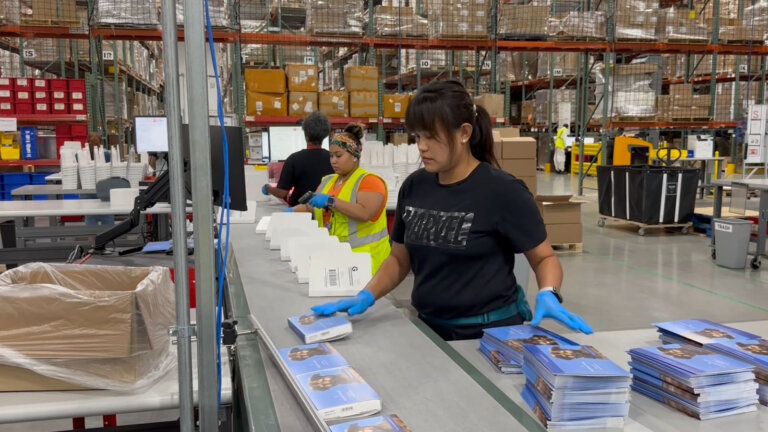
Seasonal peaks, regulated compliance, and fast-changing product catalogs can test even the strongest e-fulfillment model. With real-time visibility, automated workflows, and seamless returns, you can scale without disruption. The result is faster delivery, consistent order quality, and customers who keep coming back.
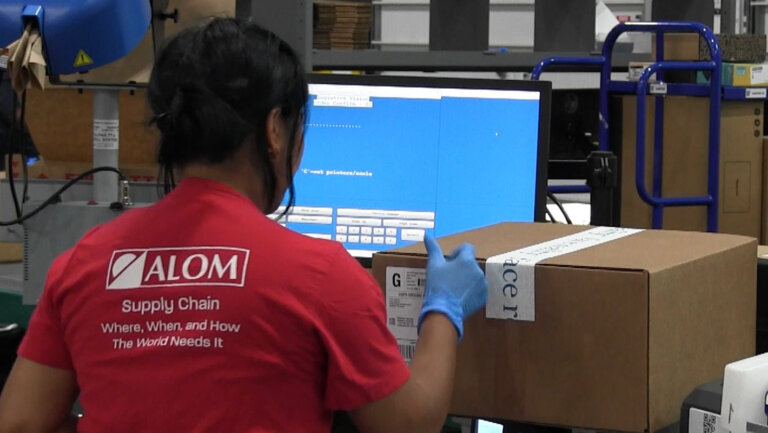
Managing e‑commerce operations doesn’t have to feel overwhelming. Our integrated solution connects intake, inventory, fulfillment, billing, shipping, and returns under one roof. And when you need help, your dedicated account team is only a phone call away.
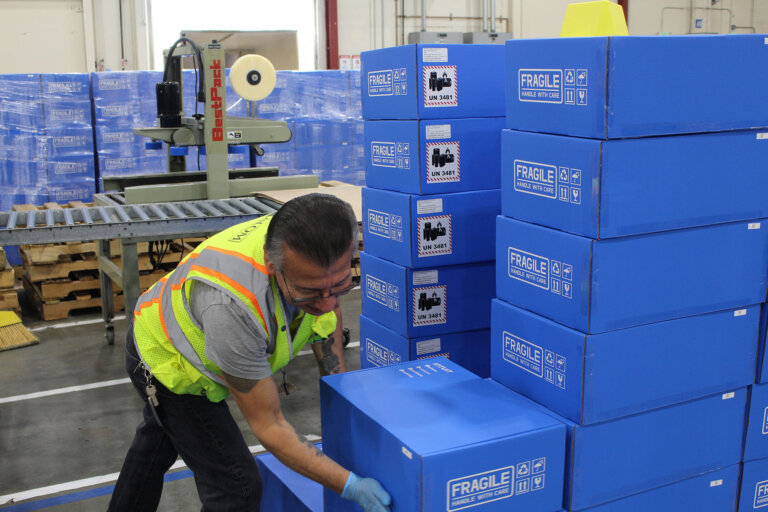
Few things erode trust faster than failed payments or data breaches. Our secure global payment infrastructure reduces risk while giving you flexibility with pricing, currency conversion, refunds, invoicing, and loyalty programs. Every transaction is secure, documented, and traceable so you can focus on growth with peace of mind.
Scaled production across multiple locations while maintaining flawless on-time shipping.
Maintained 100% accuracy and reliability in complex, high-compliance environments.
Managed complex fulfillment for over 20 years with consistently top-tier performance.
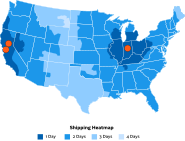
ALOM’s two-node U.S. fulfillment model delivers 48 hour or less ground service to 95 percent of contiguous U.S. addresses. Orders route automatically to the node holding inventory closest to the final destination, shortening both distance and transit time. All orders received before cutoff deadline ship out the same day. ALOM holds a 99.997 percent on-time shipping record across all customer programs and records 0.05 percent transit damage across more than 52 million orders a year, against an industry benchmark of 2 to 4 percent.
ALOM works with both. Program size alone doesn’t determine fit. Our customer base runs from large enterprise e-commerce programs to startups forecasting or experiencing significant growth. ALOM customers, regardless of size do operate in high-compliance sectors where quality, regulatory compliance, inventory control, freight requirements, and visibility are as equally important as order fulfillment speed. For a startup, growth trajectory matters more than current volume. Many come to ALOM once order demand has outgrown what they can handle efficiently in-house. The real question is whether ALOM fits where the business is headed, not just where it is today. Because every program’s requirements differ, determining fit is best done through a conversation with ALOM’s solutions development team.
The two differ significantly in complexity, not just audience. D2C e-commerce, direct-to-consumer, also written DTC or referred to as B2C, runs through a consumer webstore open to anyone who visits, supporting the selection, purchase, and delivery of individual items. B2B e-commerce fulfillment is typically the more demanding of the two to execute well. It runs through an access-controlled ordering portal built around specific customers, users, programs, and business rules. A distributor may see a different catalog and pricing than a dealer, and an installation contractor may only be authorized to order parts for certain equipment. This means contract pricing, permissions, approval workflows, purchase orders, invoicing, delivery scheduling, and third-party billing all have to be built and maintained per account. B2B orders also frequently run at higher volume and larger unit counts than a consumer order. That combination of custom business rules and greater volume is why a 3PL that handles D2C well does not automatically handle B2B well. It is worth asking about this directly when comparing providers and requesting references.
ALOM holds SOC 2 Type 2 certification covering e-commerce data privacy and network security, and its payment gateway is PCI DSS compliant, with encryption and fraud controls applied to card and ACH transactions. Programs can support card and ACH payments, purchase orders, negotiated pricing, tax exemptions, and international payment processing. For regulated programs, ALOM operates HIPAA- and GDPR-compliant data handling. Where authorized dealers or contractors order through a dedicated portal, ALOM can securely bill the purchasing party, collect funds, reconcile transactions, and report to key stakeholders.
Yes. ALOM launched its first B2B order portal in 1998 and began B2C e-commerce order fulfillment that same year. Today, ALOM executes high-compliance B2B, D2C, and hybrid e-commerce fulfillment programs for enterprise, SME, and startup brands across domestic and international markets, supported by integrated procurement, inventory management, fulfillment, and logistics operations.
Yes, through a custom-built integration, if you already run your own e-commerce platform. ALOM connects to it, and to your ERP and other systems, through ALOM’s API, with confirmed integrations including Shopify, Magento, Amazon, NetSuite, SAP and additional platforms scoped per program. These are custom API integrations, not off-the-shelf app-marketplace installs, so ALOM’s team works with yours to define the connection before the program starts, matched to your actual systems and data. Connections are built through APIs, EDI, and direct system integration with SFTP and AS2 support, secure by design. ALOM is not limited to a single architecture, so integration scope is defined with your team against your actual system platform requirements.
Yes. ALOM order management systems, inventory control, and operational processes are built to scale fast and seamlessly. This is a standard service support capability for all customers, not a paid-for add on. Inventory availability, buffer stock levels, and forecasts are monitored daily against actual demand to be prepared for unexpected spikes. When one ALOM customer, a genetic test kit brand, saw order volume jump tenfold overnight after a 60 Minutes appearance, ALOM expanded fulfillment capacity and shipped the increased volume on time. Because ALOM runs production and fulfillment lines across both U.S. service nodes, labor and order processing capacity can be allocated between them as demand shifts, and scaled down once a surge passes, so a customer is not carrying peak-sized cost year round.
International e-commerce fulfillment has all the same requirements as domestic service with some notable additions a 3PL must support. If your market strategy currently includes, or you have plans for international expansion you would be advised to work with a 3PL that has experience and resources to provide both. This includes:
The most telling question for a buyer to ask is where a 3PL physically holds inventory in region. Shipping international orders from a U.S. node adds cost and transit time no carrier discount recovers. ALOM operates from 20 locations worldwide and runs global order management and serialized returns programs across the U.S., Canada, the UK, Europe, and Asia Pacific.
Eight areas separate 3PL fulfillment providers:
Yes. The same commerce infrastructure that ships physical goods can deliver digital products – software, licenses, data, and downloadable content. In one ALOM program for a global automotive brand, vehicle owners purchase updated navigation data matched to their specific vehicle identification number and region; the webstore identifies the correct product for that vehicle, validates compatibility and eligibility, and securely delivers the content. No box changes hands, but the requirements are the same: customer verification, product selection, payment, secure delivery, communications, and transaction records.
Yes absolutely ALOM can do that. Incorporating value-added services in our e-commerce service portfolio is where ALOM is most ideally suited to support customers that require kitting, assembly, custom configuration, print, subscription, shopping cart catalog maintenance, serialization, and reverse logistics service components. ALOM systems, operational processes, work instructions, and visibility tools are flexible and designed to seamlessly incorporate additional workflow elements at scale.
Knowing inventory exists is only the first step. Order orchestration decides how a specific order should be executed: who is authorized to buy the product, which location should fulfill it, whether it needs configuration or kitting, whether serialization applies, whether regional restrictions exist, what shipping service applies, and whether substitutions or partial shipments are permitted. In enterprise programs, an order usually has to be verified and interpreted before it can be fulfilled – which is why accurate inventory alone does not guarantee a correct shipment.